Rules for Lay Therapists
Rules for Lay Therapists

  • About

    by Dr Margaret Lowenfeld

    Difficulties with lay therapists of whatever kind they are, always tend to rise at the same point, and from the same course as follows:
    All lay therapists, whether psycho-therapists, osteopaths or dieticians, tend to believe that their treatment can cure all human disease. They are therefore on the whole, willing to take on almost every type of human complaint. On the other hand, as they are untrained in general medicine, it is not within their power to make accurate diagnoses. This to them is not important, as all three types of therapists believe that illness arises from the same type of cause, and therefore apply the same treatment to each patient whatever the complaint.

    Physicians and surgeons find it difficult to work with lay therapists not usually because of disagreements in treatment, but because they notice more often and more forcibly, treatment which has done positive harm owing to the lack of diagnosis in one of two ways.

    a. The form of treatment has been definitely harmful to the actual condition. Two common examples here are osteopathy, and tubercular joints, whether the osteopathic manipulation of a joint which should be still spreads the disease or the psycho-analysis of a schizo-phrenia which has exactly the same effect. Analysis of a schizo-phrenic condition tends to increase the disorder.
    b. Through use of the lay form of therapy rather than immediate reference to a physician or surgeon, delay is caused which becomes ultimately fatal. A common example of this fault occurs in cases of cancer, when often the moment is missed, owing to the attempt “to cure” the condition, which surgical treatment could have removed the primary focus, and have saved the patient’s life. Another example of the same error is when dietetics and other treatments are used for some condition without the drugs which a physician would use to spare the heart. As a result death occurs through over-action of a diseased heart

  • Specification

  • Delivery & Returns


download

You May Also Like

Play and Symbolism in Lowenfeld and Winnicott

In her biography of Margaret Lowenfeld which appears as the introduction to the book of Lowenfeld’s selected papers entitled Child Psychotherapy, War and the Normal Child (1988),...
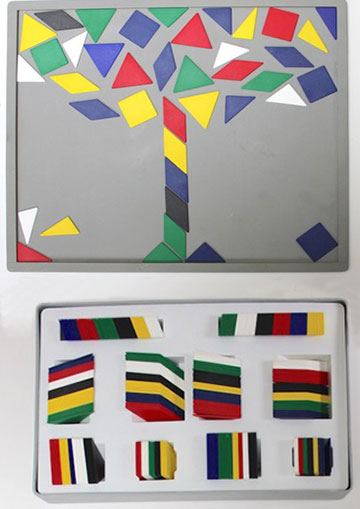
Lowenfeld Mosaics – complete set of tiles and tray

By Margaret Lowenfeld This order comes with a free copy of Expressing the Shape and Colour of Personality by Therese Woodcock and The Lowenfeld Mosaic Test book. Price: £123.00 pl...
Price: £123 £123
The Significance of Play

The Significance of PLAY in the Normal Development of Children By Margaret Lowenfeld 1938 When the adult uses the word ”play” in his description of children or his thoughts abo...
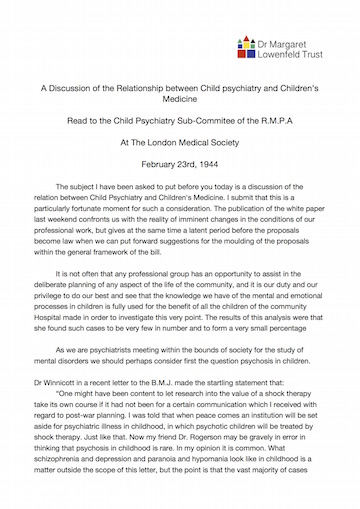
Child Psychiatry and Medicine

The subject I have been asked to put before you today is a discussion of the relation between Child Psychiatry and Children’s Medicine. I submit that this is a particularly f...